The Other Shoe
I started writing this in November when I was struggling with some old insecurities being validated by circumstance, unsure how to cope with that; I then started writing it again around the New Year, because New Year’s is such a turbulent confluence of hope and anxiety. I was too busy then, and meanwhile the wheels of life spin ever faster, milling the soul like grain. So here I am, trying to patch together coherence out of the half-formed scraps of thought of the past few months. But though it is February, I want to situate this in the context of the New Year, because that is the moment when people are, all at the same time, most conscious of slipping into that undiscovered country that is the future. For me, the fear is never future’s obscurity, but rather the thought that it is perhaps too transparent.
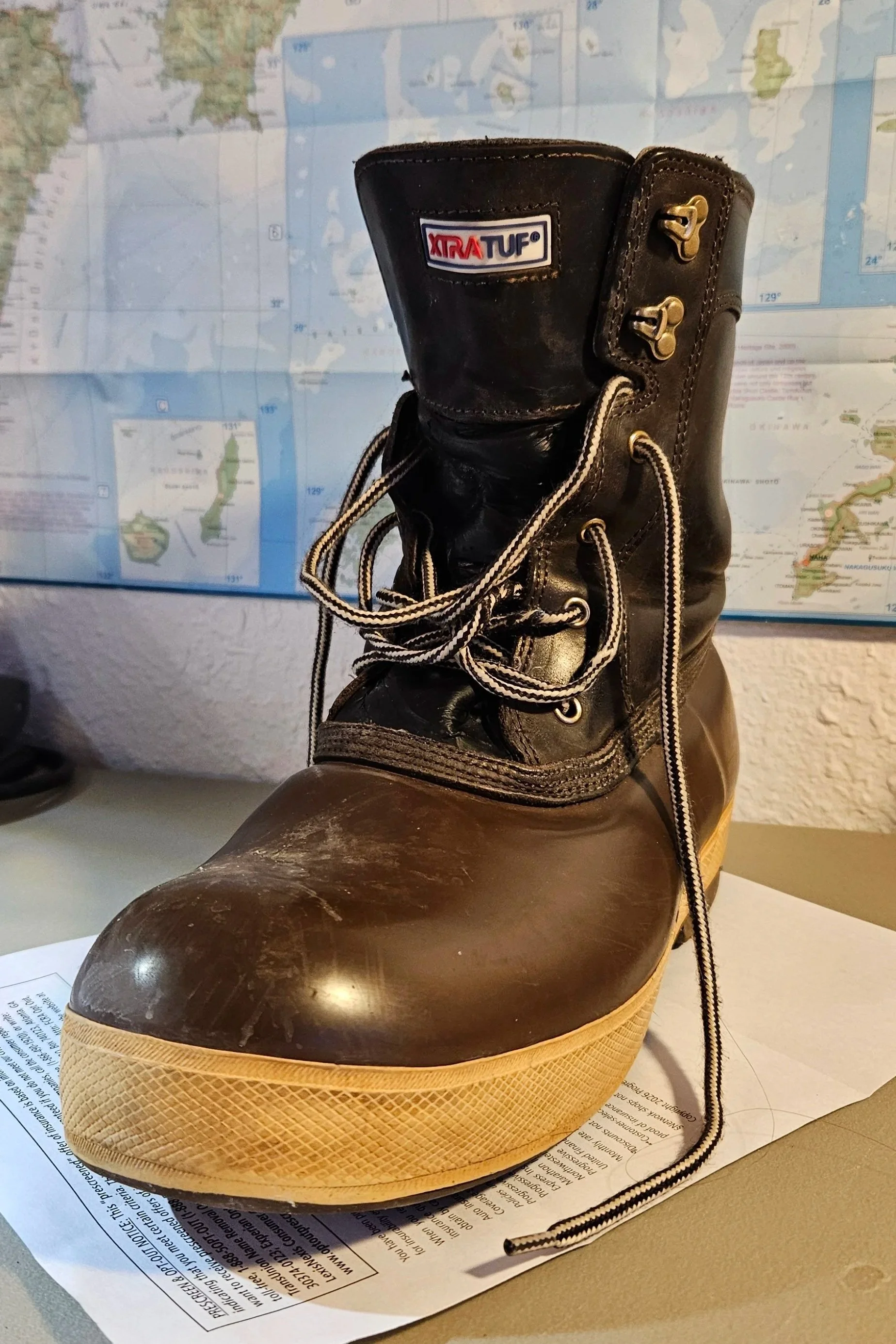
The anxious life is spent waiting for the other shoe to drop. I have listened a great deal to people who have helped me try to not live in that expectation, and have spent a long time trying to alter my perspective, to understand the irrationality of my worry, to see it as unhealthy, to see it as overshadowed by a larger hope that dwarfs whatever it is I fear. But in doing this, I come to rely insistently and perhaps greedily on the assertion that there is no other shoe. So what happens when, after all that time training yourself to dismiss and disregard intrusive anxieties, your turn a corner and what you feared all along happens.
Sometimes the shoe drops. Sometimes the thing you worried about, the thing you sought and found reassurance against from other people, the thing you were working very hard to teach yourself to recognize as an intrusive and irrational thought and dismiss as unhealthy and unreasonable, occurs. Everyone has experienced this at some point, and that is perhaps why we find it so hard to get over the fear that the experience will recur. Perhaps you watched the exit polls with mounting dread on election night; or procrastinated anxiously, worrying about your compounding sense of future shame as your procrastination accumulated toward the end of the predictably unproductive day; or you lived in fear that people secretly were frustrated with you, disappointed, annoyed, and then after trying to convince yourself to have confidence over your insecurity, you found out that you were picking up on real signals; perhaps you feared that you would fail at some responsibility or break some trust, and it would be your fault, and then you did; perhaps you worried that the nagging feeling that you were doing something or had done something wrong might be real, and after much encouragement from others to stabilize your feelings and live in spite of that, events make plain to you that yes, you felt guilty because you were; perhaps you feared that if you didn’t fail, if you carried things through as you felt you should, it would be a continuous, crushing weight – and then it was, and then you either gave up, or thought yourself shiftless instead of burdened, or became afraid to hope for relief; or perhaps you struggled to believe some part of your life was solid and could be relied on, and that your insecurities and doubts that you had made certain of it were shadows to be dispelled, and then the solid thing collapses in a way that makes you question even the things you weren’t insecure or doubtful about yourself in the past.
One of the hardest parts about anxiety is that one is always anticipating things that can go wrong, and especially things that one could screw up in some way. There is the sense that worrying is a necessary preventative against failure, against being caught by surprise – but it is too exhausting to sustain. But past experience, both of misfortune catching you by surprise when you felt safe, and long-dreaded fears being realized, works against your attempts to shrug off the burden. If you find these fears to be untenable, acidic to peace of mind, then this creates a kind of lesson of repeated experience teaching that if you can imagine something happening, you can’t trust reassurance that you are safe from it, and if you do trust that and relax, it may then catch you anyway, thus giving ammunition to every other fear and doubt you’ve ever had.
I struggle to write about this even though I think about it much more than other topics, because I think it is important to come to some kind of true conclusion that provides catharsis; but I struggle to find a catharsis that I feel is true and that I am prepared to accept. I suspect the wise answer to all this is to recognize that the thing you fear may happen, and to overcome this fear with confidence in the ultimate promise of God that all shall be well. But aside from being much easier said than done, there is always the lingering suspicion that, just as one refuses to reconcile present peace of mind with the possibility of some sudden loss, because one has decided the loss is unacceptable, by the same token one fears that insofar as you find some earthly loss unacceptable, you perhaps cannot trust the promise that all shall be well, either because what you imagine you require for that to be true is not included in the promise, or, because of that, you are insecure that the promise applies to you personally. Then the pattern of dreading the other shoe, and being terrified to be unafraid and thus caught unawares, applies itself to death and the fear of what comes after, and this is much harder to shake, because there are things we read and hear which seem designed to awaken fear, and there are parables of people caught unawares who weren’t worried – and of course, the way in which you try to relax out of your worries does not always involve a complete surrender of the things you fear to lose, so you doubt you can call your peace of mind holy.
I think a part of the answer to this problem is to focus on the reality of death itself. Death’s inevitability makes every other loss we fear inevitable and rational; it is itself the other shoe, and it will certainly drop. The only way I know to live without worrying about what might come after, is that Christ went through death with us and thus shows that after the last shoe drops, He will pick us up, help us tie them on, and then we shall get to walking. But that feels a bit like trying to cheat on my part, eliding the question of responsibility to fear judgment and repent to escape it; perhaps it is getting off too easy. I want to say that this sort of faith must be true because I lack alternatives; but that may be a denial of responsibility, of the possibility of choosing to repent, to at least try, more than I do, so I fear to assert that with confidence. And so I feel as though I can describe the cathartic answer, but I cannot allow myself to actually deliver it as I am.
