Mary Nell Roos, 1932-2026
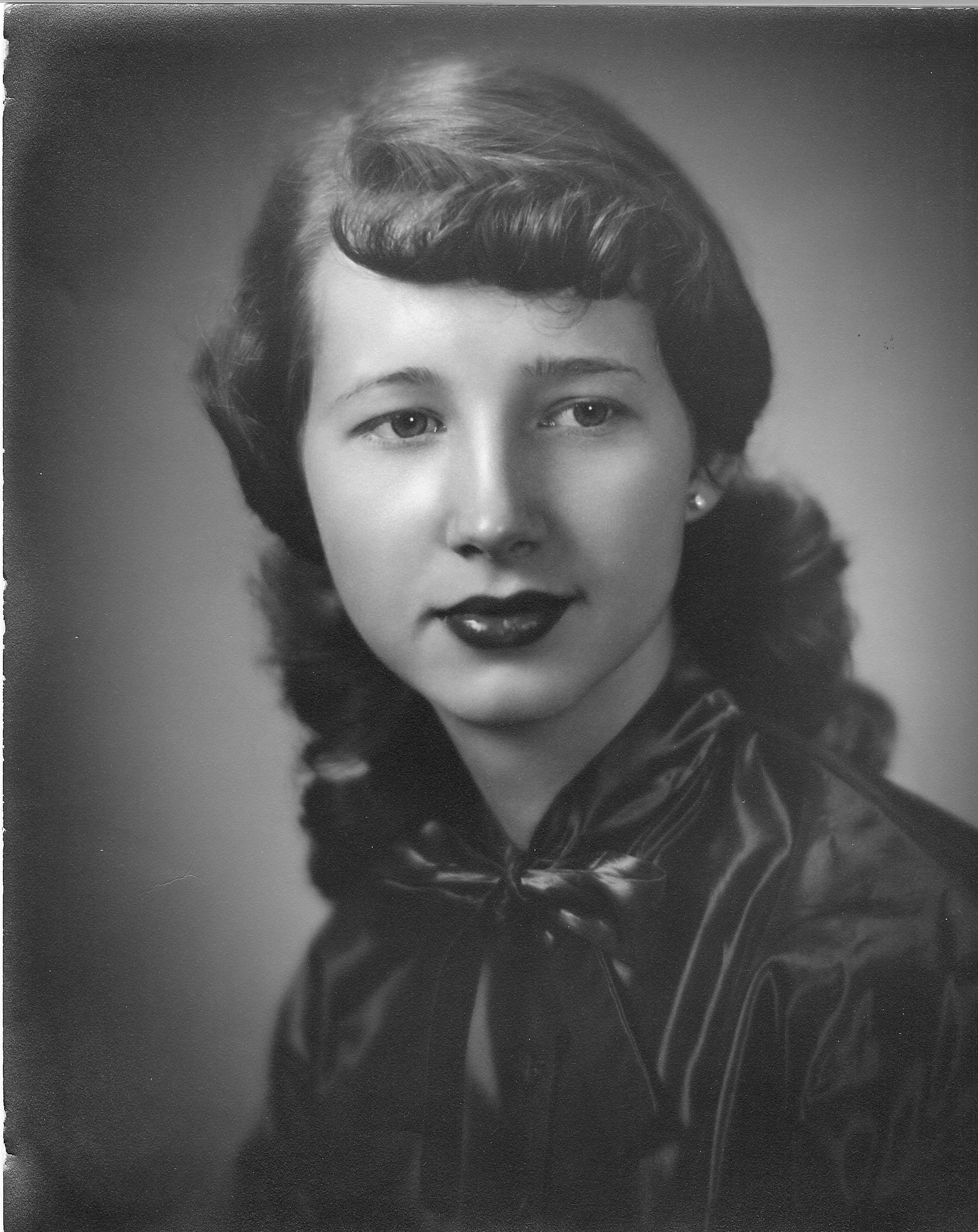
I have been greatly blessed to have had two grandparents in my life until my mid-thirties. My Grandfather passed away last spring (https://www.andrewroosbell.com/blog/jack-roos-1932-2025), and on January 8 of this year my Grandmother passed away peacefully at the age of 93. As a child, I spent much time with Grandma at her house in Mukilteo, where I came to associate her with the smell of coffee. She always offered me some, and as I child I simply was not interested, which will shock anyone who knows me now. She encouraged my love of music, introducing me to members of the zither family such as the autoharp, which are perhaps less popular and well-known nowadays. And she was always teaching about her great passion, history, and particularly the history of the Second World War. I absorbed so much detailed information about the war from Grandma and her documentaries, magazines, books, and stories, and I was fascinated by the thought that this war existed in living memory – that it was so recent that she had been a child during it, old enough to remember.
In 1944, my Grandmother’s uncle Noel, my great-great-uncle, was killed when his B-24 Liberator crashed on takeoff in Flixton, Suffolk. I know this sounds odd, because my Grandmother was only 12 at the time, but her uncle Noel continued to be a relationship that mattered to her for the rest of her life, as he inspired her passion for the history of the war, leading her to spend decades working to research and preserve the history of the 446th Bomb Group of the 8th Air Force. It is this sort of unglamorous, unpaid, painstaking research done by individuals into the kind of details of individual institutions and lives that outnumber the attention capacity of the population at large, which creates the base matter which composes history. As I have gotten older, I have only grown in appreciation for her role as a record-keeper, something I always worry about losing in our society.
But my Grandmother was not simply a hobbyist with a personal motive; I think Noel never stopped mattering to Grandma as a person, because she understood what on some level we all understand emotionally, even if we feel the need to correct what we hope for with the caution of cold rationality, or habitual pessimism. What my Grandmother always understood was that her uncle was not simply a person she had known as a child, and who now existed only in those few distorted memories, and who was receding rapidly into the distant past; rather, he was, and is, a person and a family member, simply absent for the time being. Grandma understood that it is never a waste of time to miss those who have passed away, and that it is all right to miss them, because the remedy of hope exists, that death is simply an interruption, and we will see them again. And so my Grandmother died in great hope and anticipation; hope of meeting her uncle again, anticipation of being reunited with my Grandfather, who she missed dearly, and in the assurance that she would not die alone. She passed in her room at night, by herself, but not alone – Christ was by her side.
I struggle greatly to have this hope in my own life. Even as a lifelong Christian, I have a terror of death, both of the physical sensation of ceasing to breathe, and moreso a terror of what might come after: terror that I might be wrong; terror that others might enter peace, but I might not be willing to; terror even that what that peace might bring might not be what I want. But Grandma is an example to me in this; she died confident in the hope that she would be with her husband, Jack, again, and in a way that would not be less than what was before, even though how to understand that is beyond our theology.
The only sane way to die is in hope. And not false hope, but hope that we are sure of. Nothing else will do; we cannot control our deaths, we cannot save ourselves, and yet we must live and die. Since death is inimical to life, the only way we can ultimately live in spite of it is to believe that God will be with us after, and that all shall be well. We are certain that what we hope for is true, because we must be; and because we are so created that we must live in this hope, we know that it is true. Grandma knew that, and I will endeavor to remember, in forty or fifty years, her example.
