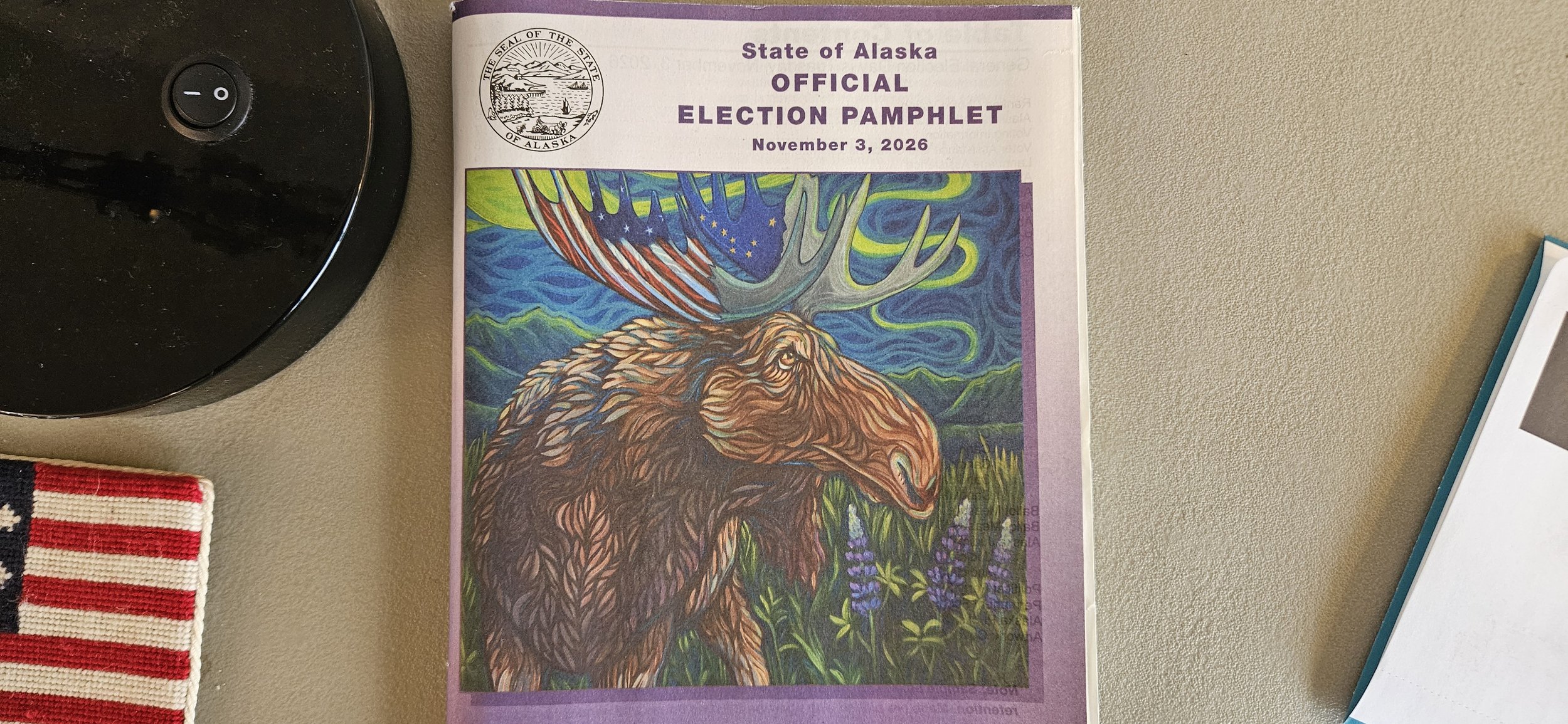
The first general election I voted in was the 2008 election. At that time I was a libertarian-flavored Republican, and I had grown up with the impression from talk radio that the Washington State Democrats were not above cheating, and because I loved politics and getting out of the house and wanted to be involved in everything I could, my friend and I volunteered to be GOP poll monitors. Ultimately, this was a very anticlimactic experience: we milled around the polling place, and just watched the evening of very quiet, ordinary voting; nothing at all interesting happened, other than the result of the election – which was itself anticlimactic, because I was unsurprised at Obama’s win (polls used to mean something), and to be honest I was not even that disappointed, because the stakes seemed fairly low, and it was easy and enjoyable to like Obama, even if you disagreed with him. I am sure the usual cranks ran to their conspiracy theories about electoral cheating, and obviously a persistent lie about eligibility took hold of a subset of voters, which would bear cancerous fruit eight years later – but nobody serious had any doubt that Obama had won in a landslide, fair and square.
Eight years later, Donald Trump was running not only on the remaining fumes of birtherism, but against all American institutions, and all institutional trust. His campaign thesis largely amounted to claiming that things were rigged, that the establishment cheats, and that the country was broken. He won by spreading conspiratorial myths about the America of 2016 that were not actually true. At the time, I was adamant that our country needed to trust institutions, like experienced bureaucrats, mainstream journalistic outlets, and political leaders with experience and a history of principled moderation. Without choosing to exercise that trust where it was merited, I felt we couldn’t cohere as a polity; and I also felt that it very much was merited. That is not to say that many, many Americans weren’t hurting in real and urgent ways, economically and culturally and spiritually; but that this was the human condition, that things were actually going pretty well by all historical standards, and that upsetting the apple cart was a surefire way to make things worse, and nip any chance of improvement in the bud.
Ten years later, I have largely the same worldview and the same sense that we need a heuristic of institutional and societal trust; but in the decade intervening, Trump has thoroughly upended the apple cart, with plenty of help from people of every ideological stripe. Now, as much as we need to be able to trust our institutions and abide by the results of a free and fair election, it feels genuinely possible that we may not get one. I do not want to concede ground to the doubts that Trump inspired about our electoral system, which have eaten away at America like acid; but we cannot close our eyes to the reality how the President has tried to rig the game in the way he accused his opponents of doing. On January 6th, 2021, Trump attempted a coup against the result of the 2020 election. He failed because key members of government, including Republicans, most importantly Vice President Pence, stubbornly carried out their Constitutional offices according to the law. Impeached, the GOP had an opportunity to hold Trump accountable, and rid themselves of an albatross around their political necks. But when time came to vote, the party largely fell in line behind Trump, afraid of his fans among their constituents. Seven Republican Senators did vote to convict, and we should remember them: Senator Burr, Senator Cassidy, Senator Collins, Senator Murkowski, Senator Romney, Senator Toomey, and Senator Sasse. But 43 voted to acquit, and they carried the day. Then, in Trump vs. United States of America (2024), the Supreme Court ruled that as President, Trump had broad immunity from criminal prosecution. And finally, in 2024, a majority of the American electorate voted to put Trump back in office. I don’t think that result was fraudulent; I think, perhaps worse than that, that voters simply did not care about Trump’s attempt to overturn the previous election.
So Trump tried to steal an election, and he got away with it. He proved that if he tries to cheat, his party will stand behind him and protect him from political removal; he has legal immunity from most criminal prosecution; and the voters are happy to ignore his crimes, or even reward him despite them. And he has learned not to have people in his administration who would ever put the Constitution above Donald Trump. And there is a troubling pattern of behavior among some Republican officials, and some very clear warnings from the Trump administration itself.
In California, the Sheriff of Riverside County launched a rogue ‘investigation’ into alleged voter fraud, and seized 650,000 ballots from election officials: https://www.nytimes.com/2026/09/24/us/riverside-county-california-sheriff-seized-ballots.html?unlocked_article_code=1.EVE.oOtA.ysMqEGdHFlDG&smid=url-share. California Associate Justice Goodwin Liu wrote, “I would underscore the seriousness of the violation here. This is not a case involving a few documents. It involves the unlawful removal and handling by armed deputies of over 1,000 boxes of documents — and not just any documents, but the most precious documents of the citizenry in a democracy: their votes.” The state Supreme Court has ordered the sheriff to return the ballots, but in a close election, local officials going off script in an environment where there may not be thorough, levelheaded review and adjudication after the fact, could have impacts beyond their locality.
In Wyoming, federal agents attempted to confront poll workers at primary election voting sites this August: https://thedispatch.com/article/justice-department-observers-wyoming-primary/?gift_key=3d7f3080b02be8f2&gift_ref=3935111&utm_source=giftlink&utm_campaign=membergift&utm_medium=copy_link. The Dispatch reports: “On August 18, two Department of Justice (DOJ) election observers traveled to six of seven polling locations in Laramie County, the most populous county in Wyoming, and said they wanted to interview voters to ensure compliance with voting rights laws. ‘We do not allow interviews to be conducted in polling places, so this was denied,’ Laramie County Clerk Debra Lee said in a statement. Lee also said that the DOJ observers wanted to examine the tabulators (vote-counting machines) and were rebuffed. ‘This was a poorly managed exercise and one that showed complete disregard for our state laws and administration of our elections,’ Lee said in her statement. She added the DOJ officials did not show credentials until she asked for them and that she had not been alerted before polls opened that the feds would be there.” Perhaps this is just a couple of agents who don’t really know what they’re doing – but in this administration, with its unprofessional staffing and fast-and-loose approach to the rules, all governed by performative displays of loyalty to a wannabe caudillo, one must consider the possibility of far wider and more determined interference on November 3.
I know it is strange to read about this confrontation with state officials happening in Wyoming, the state Trump won by the widest margin – but this administration has been busy burning down any bridges of trust that existed with state election officials all over the country: https://www.theatlantic.com/politics/2026/02/trump-gabbard-election-investigations-states/685922/?gift=jUioLBatr3tIwuTcBrggCR7OsHgjgslSs0y5sdpu8VU&utm_source=copy-link&utm_medium=social&utm_campaign=share. Reports the Atlantic: “‘The trust,’ Maine Secretary of State Shenna Bellows told us, ‘has been absolutely destroyed.’ The sentiment is not confined to Democrats. Some state-level Republican election officials, who, like others interviewed for this story, requested anonymity to speak freely, said that federal officials’ activities involving elections have become so unusual that they are starting to question the federal officials’ competency and motives. These state officials wonder whether the feds are trying to do what Trump has accused others of doing: rig an election.” While not the upcoming election, Trump’s obsession with proving the Big Lie that the 2020 election was stolen from him led him to send Director of National Intelligence (and certified kook) Tulsi Gabbard to seize ballots left over from the 2020 election in Georgia. He appears to have sent her because the Justice Department was too concerned with following the law to demonstrate the alacrity of loyalty Trump demands – said one Trump admin official: “Justice has just sat on things for months. It boggles the mind that they wouldn’t just take the ballots….[Trump] should have gotten them on the first day of his term.” But never fear – the DOJ is being reshuffled to put more election oversight in the hands of officials from Missouri who helped Trump try to overturn the 2020 election. And Trump certainly has his fans and boosters who are actively encouraging him to try to illegally nationalize the elections. Former Campaign Manager Steve Bannon said “You have got to call up the 82nd and the 101st Airborne on the Insurrection Act. You’ve got to get around every poll. We will not accept anything less.”
Most troubling of all are Trump’s own words. At the start of this year, he openly admitted to the New York Times that he regretted not having ordered the National Guard to seize voting machines in swing states in the 2020 election: https://www.nytimes.com/2026/01/11/us/trump-voting-machines-2020-election.html. We all know Trump delivers a firehose-volume of outrageous braggadocio and scandal every time he opens his mouth; but this is a man who did in fact try to steal that election, and one whose words have often been dismissed as “Trump just says things,” only for the things he says to be borne out in government policies with real consequences (remember how we got to be at war?). Trump has also said that he will accept the election results only “if the elections are honest” (what are the chances he thinks they’re honest if they’re anything less than a resounding Republican victory, an outcome which seems extremely far-fetched at this point?), and he has also said that given that midterms usually end in losses for the incumbent President’s party, “we shouldn’t even have an election.”
Hopefully this will all come to nothing, and you’ll think I was worried for no reason. And it is quite likely that a Democratic margin of victory will be too large, and the election too administratively decentralized, for Trump to actually do much. I certainly hope so. Still, we need to contemplate what we are actually to do next Tuesday if the Republicans lose, and Trump does something drastic to prevent the result taking effect, or simply overturns the board mid-election in a way that makes saying who one or lost a game of he-said/she-said – especially where the margins are narrow and one or two seats makes a world of difference.
Going back to 2015 for a moment, I want to note that even before Trump, our political system was under what at the time felt like a degree of stress from the long-term structural skew of how elections work in this country. I recall a great deal of pre-Trump discourse among wonks and politicos about how voters were always left frustrated with every government they elect, both because it was incredibly difficult for either party to ever get enough of a supermajority to actually try out their policies, and because smaller states and more rural areas are overrepresented simply as a matter of how the Constitution has worked out in practice, in an urbanizing America. These two factors mean that the public can easily have a majority opinion that they are never able to make progress on implementing. There’s an extent to which this is a feature of our system – some things need to be out of the voters’ hands, like essential liberties and human rights. But what we have goes well beyond that and amounts to an America that is a car with its steering column locked up. Systems need to respond to popular pressure at some point, or they break – this is a big part of what has happened in Europe, and I say that as someone who thinks European electorates are morally wrong to resort to sweeping xenophobia – but absent the ability to influence policy, political majorities will grow more extreme.
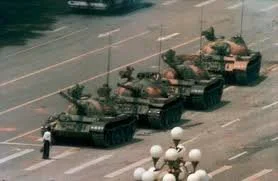
My point is that our system has been growing increasingly brittle for a long time, and Trump is prancing about with all the delicacy of a drunk elephant amid the ceramic cabinets of the Vienna Hofburg. And while I try not to worry, there is always the specter of a real election steal, from the top down. If half the electorate (who voted for Trump) can be persuaded to buy whatever fig leaf of a story the President sells them, and he’s already replaced senior officials, fired a lot of generals, and tested deploying ICE as a very loyal force of armed men who have already killed a couple of protesters – could we be staring down the barrel of an American Tiananmen Square?
This is where the question of what we each should do becomes urgent. I don’t know how to look at the future and estimate the correlation between actions and outcomes on our part – and I think doing so may actually be dangerous. Some people have fantasies about civil conflict, and anyone can pitch themself a scenario where that seems plausibly justifiable – but that is not a path we want to choose to go down. I think it’s one thing to fight back when one doesn’t throw the first punch, but it’s another thing entirely to open the door to hell on our neighbors. And you can’t even know that that wouldn’t make things much worse. I want to be clear – if Trump tries to overturn the election on Tuesday in one way or another, then the United States may not have a legitimate government any more. But that means the responsibility of self-government comes fully home to each of us, and with it two obligations: the obligation to stand up and resist that unjust suborning of our democracy; but also the obligation to conduct ourselves with justice – which is to say, to behave like citizens and not like anarchists. We must recognize in advance that we do not control what happens to us, or individually, to the country; we only control what we do. So, we must utterly reject any unjust attack on our neighbor, any wanton destruction of our communities; and we must walk peacefully and resolutely forward into the public square, and stand our ground, whatever awaits us there.